The Short Answer: You Can Leave, But Timing Matters
Do you have to stay at the laundromat while your clothes are washing? No, but we recommend it. A typical wash cycle runs 25 to 40 minutes. Machines don’t lock once the cycle ends, and nobody is watching your load after it stops spinning.
You can step out to grab coffee or run a quick errand. Just know the clock starts the second you press start, and it doesn’t care where you are.
So how long can you be gone? Think of it in three windows.
- Under 20 minutes: low risk. Your load is still spinning, and nobody can open the machine mid-cycle.
- 20 to 40 minutes: cutting it close. You may come back to a finished machine sitting idle.
- Over 45 minutes: risky on a busy day. Someone waiting for a washer may pull your clothes out and set them on a folding table.
Most of the time, that’s just someone who’s been waiting with a full basket. But laundry does get stolen at laundromats, and it happens here too. That’s why our signs say it plainly: we are not responsible for lost, stolen, or damaged items. A finished load sitting unattended is the easiest one to walk off with.
Weekends are our busiest stretch, so if you’re washing then, stay close or set a timer on your phone. Tuesday and Thursday afternoons are usually our quietest, and you’ll have more breathing room.
Heat matters too. On a hot Hemet day, damp clothes left in a machine start smelling sour faster than you’d expect. A load left an hour past the cycle can need a rewash.
Why Wash Cycle Length Shapes the Stay-or-Go Decision
Once you know how long your cycle runs, the decision mostly answers itself. Most machines post the cycle time right on the panel, and many show a countdown once you start. That little number is the most useful piece of information in the building, and people walk right past it.
Times vary by machine and setting, but these ranges hold up well:
- Quick or express wash: about 20 to 25 minutes
- Normal or regular wash: roughly 28 to 35 minutes
- Heavy duty or bulky: often 35 to 45 minutes, common with comforters and work clothes
- Large capacity machines: similar timing to standard, but they handle way more in one go
- Dryers: usually 30 to 45 minutes, sometimes longer for thick bedding
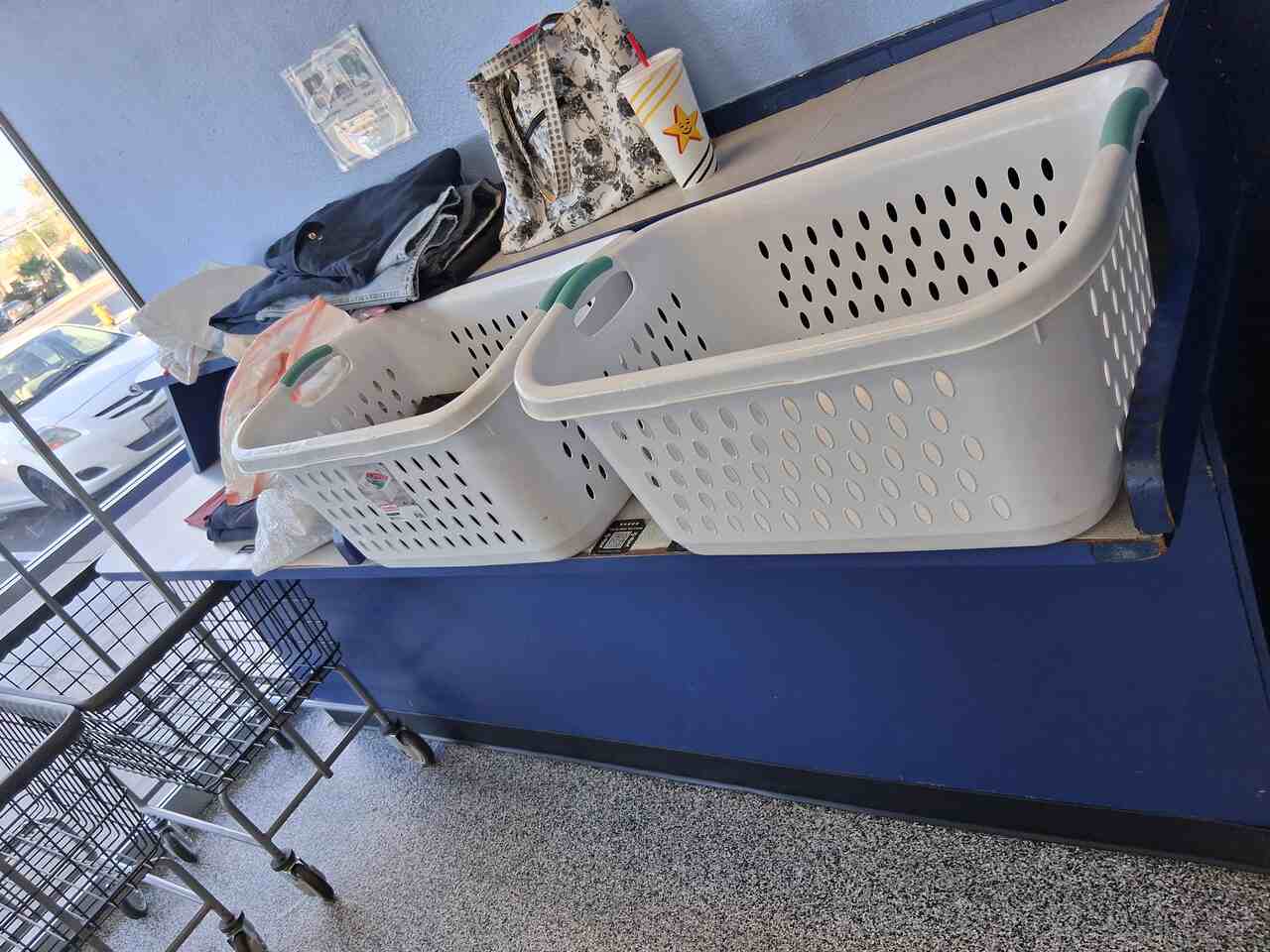
A normal wash gives you about half an hour. That’s enough time to hit a nearby store on Florida Avenue and be back before the buzzer. It’s not enough to drive home, unload groceries, and return.
Large capacity machines change the math. One big load can replace three small ones, so you’re running one cycle instead of three back to back. That can turn a two-hour visit into a one-hour visit, which makes waiting around a lot easier. One of our regulars used to run four small machines every Sunday and spend almost three hours here. She switched to one large machine, and now she reads a book, finishes, and leaves. Same amount of laundry.
Dry cycles run longer, so it’s even more tempting to leave. But warm clothes wrinkle fast in a stopped dryer, and someone else may need the machine. Plan to be back before it stops.
Before you decide anything, check the time on the panel and add five minutes of buffer. If you’d rather skip the wait altogether, you can drop it off for wash and fold and pick it up clean and folded.
Scenarios: When Stepping Away Makes Sense (and When It Doesn’t)
Not every wash day looks the same. Some days you’ve got two loads and a book. Other days you’ve got a kid in the car and a prescription to pick up before the pharmacy closes. Run through this before you grab your keys:
- Check the timer. If the cycle has less than 20 minutes left, just stay. You’d spend most of that driving anyway.
- Look at how busy it is. When machines are turning over fast, someone may need yours the second it stops.
- Tell an attendant which machine is yours. It costs you nothing, and someone will know whose load it is.
- Set a phone alarm for two minutes before the cycle ends, not at the exact end.
- Ask yourself how you’d feel if something went missing. If the answer is “I’d be sick about it,” don’t leave that load.
That last one matters more than people think. Folks leave work uniforms or a brand-new comforter behind, and even when nothing happens, they spend the whole errand worrying.
Short trips work best, like grabbing coffee nearby or walking a few doors down. Go somewhere you can be back from in five minutes. And on a 100-degree day, there’s no reason to wait in a hot car. Our laundromat is fully air-conditioned.
Some situations really call for staying in the building:
- You’re washing something expensive or hard to replace, like a wedding dress or a family quilt.
- The laundromat is packed and machines are turning over fast.
- You’re running several large capacity machines at once. That’s a lot of clothes to leave unwatched.
- It’s getting late. We’re open until midnight every day, so check the clock before starting a long wash and dry.
Here’s a real one. A customer loaded two large capacity machines, ran errands, and when she came back 70 minutes later. Both loads were gone. She asked what happened? We checked cameras to see what happened and found who took her laundry. However, there was no way to get it back. Now she sets two timers. Smart woman.
Is staying really that bad? Most people find it easier than they expected. Thirty minutes with your phone and nobody asking you for anything is rare in a normal week. You’re right there when the buzzer goes off, so your laundry moves straight to the dryer instead of sitting damp.
Want to cut your time down? If you only need to dry a load you washed at home, our dryer-only option gets you in and out. And if you’d rather not wait at all, drop it off with our Fluff & Fold service and pick it up washed and folded.