Why Fitting Isn't the Same as Cleaning
A laundromat washer gets bulky items cleaner because cleaning depends on movement, not just space. Big loads need room to tumble so water and detergent reach every fiber. When a comforter is packed tight, it just spins in place and comes out damp, soapy, and still dirty.
Here's the question we hear most in Hemet: will a laundromat washer get bulky items cleaner than the one at home? Yes. And the reason has nothing to do with fancy settings.
It's about room to move.
You can stuff a king comforter into a home washer. The lid will close. The cycle will run. But fitting and cleaning aren't the same thing, and most people don't realize that until they pull out a blanket that still smells like the dog.
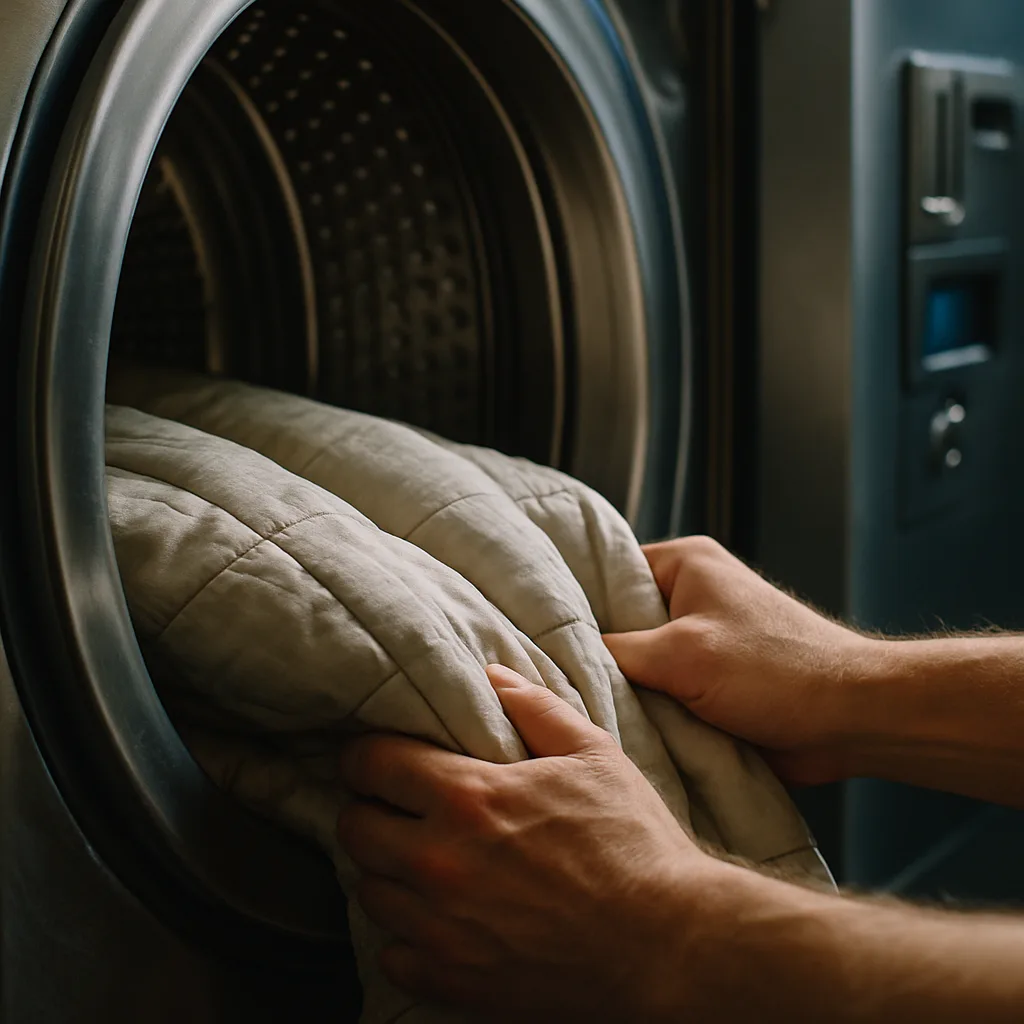
Washing machines clean through agitation. Fabric has to lift, fold, and drop through the water over and over. That motion pushes soapy water through the fibers and pulls dirt back out. When a big item fills the whole drum, none of that happens. The comforter becomes one heavy lump, it rotates as a solid mass and the water never gets pushed through the middle.
So what does a packed load look like when it comes out? Usually one of these:
- Dry or barely damp patches in the center of the comforter
- Stiff white streaks where detergent dried without rinsing out
- A sour smell that shows up again once the item warms up
- Clumped or shifted filling that never spread back out
- Stains that look faded but are clearly still there
We see this mistake all the time. Someone runs the same blanket twice, thinking a second cycle will fix it. It rarely does. Two bad washes still equal zero good ones.
There's a rinse problem too. Detergent needs clean water flowing through the fabric to leave. A jammed drum can't rinse properly, so soap stays behind. That leftover soap is what makes a comforter feel crunchy and attract dirt faster next time.
Large capacity machines fix this with plain physics. The item gets space on all sides, water circulates freely, and the tumble action works the way it's supposed to.
Want to know if your load is too big before you waste a cycle? Try this:
- Put the dry item in the drum without pressing it down.
- Look for open space at the top, you should see about a third of the drum empty.
- Push a hand into the center, it should move easily, not feel packed.
- Give the item a light spin by hand and check that it shifts freely.
- If any step feels tight, move up to a bigger machine.
One local example. A customer brought in a queen comforter she'd washed three times at home after her dog got sick on it. Smell wouldn't quit. One run in a large capacity machine and it came out clean, with the fill evenly spread again. Three home cycles wasted, one right-sized wash did it.
With Hemet summers being what they are, sleeping under a blanket that never fully rinsed isn't fun. Heat brings that trapped smell right back.
How Drum Space Affects Water and Detergent Circulation
Here's the short answer to why drum size matters so much. Water can't clean what it can't reach.
A comforter or sleeping bag soaks up a huge amount of water. It swells. In a small drum, that swollen bundle presses against the walls and stops moving. And once it stops moving, the wash is basically over. The middle of that blanket stays dry-ish and dirty while the outside gets all the action.
Cleaning happens because fabric moves through water, not because fabric sits in water.
Think of it like stirring sugar into iced tea. Stir it and it dissolves everywhere. Let it sit and it clumps at the bottom. Detergent behaves the same way inside a washer. It needs room to spread across every inch of fabric.
So what's going on inside an overstuffed drum? Most people picture soapy water swirling around. The reality is a lot less exciting.
- The item absorbs water and doubles in weight and bulk.
- It jams against the drum wall and stops tumbling.
- Detergent pools in one spot instead of spreading through the fibers.
- Dirt lifted from the fabric has nowhere to go, so it settles back in.
- The rinse cycle can't flush soap out of the compressed center.
- The spin cycle throws the load off balance and leaves it soaking wet.
That last one is why a home washer sometimes bangs across the laundry room floor. The load never balanced, it just got heavier.
A bigger drum fixes this with plain old space. The item lifts, drops, folds over itself, and lets fresh water push through the middle. We see the difference every day with the large capacity machines at The Laundry Basket in Hemet, especially on king comforters that people swore were clean at home.
Water temperature and detergent amount matter too, and this step-by-step guide to doing laundry covers those basics well. But they're second place. Room comes first.
Not sure if your last wash worked? There are a few giveaways that the drum was too small for the job.
- Stiff or crunchy patches once the item dries
- A faint soapy smell that lingers after a full dry cycle
- Clumped or shifted filling inside a comforter
- Damp spots in the center hours after the dryer finished
- Stains that faded but never fully lifted
Detergent residue is the sneaky one. It traps dust and body oil, so the blanket gets dirty faster the next time around. Most folks blame the detergent brand. It's usually the drum.
Hemet summers make this worse,. Dust and pollen work deep into thick bedding, and a crowded wash just pushes that grit around instead of flushing it out.
One more thing worth knowing. A properly loaded drum should be about two-thirds full before you add water. Any tighter and you're just soaking, not washing. Loose is better than packed, every single time.
That same focus carries through the practical large capacity machines guidance our team provides to local families.
Bulky Items That Need Extra Drum Room
Some items just don't belong in a home washer. You can force them in. You can shut the lid. But the water and soap never reach the middle, and that's where the dirt lives.
Here's the test I give people. Can the item tumble freely with room left over? If it fills the drum like a cork in a bottle, it needs a bigger machine.
These are the items we see struggle most often at the laundromat.
- King and queen comforters, especially down or thick poly fill
- Sleeping bags and camping quilts after a weekend near Diamond Valley Lake
- Mattress pads and thick memory foam toppers
- Area rugs and bath mats with rubber backing
- Pet beds, dog blankets, and horse blankets
- Heavy winter coats, work jackets, and coveralls caked in dust
- Curtains and blackout drapes that soak up a full season of desert grit
Notice the pattern? Every one of those items holds a lot of water. A dry comforter feels light. Wet, it can weigh twenty pounds or more, and all that weight collapses into a dense lump.
That lump is the problem.
Water can't push through it. Soap sits on the outside. The agitation that's supposed to loosen dirt never happens because nothing is moving. You get a wet blanket, not a clean one.
We see this mistake all the time with pet bedding. Somebody washes the dog bed at home, pulls it out, and it still smells. They think the detergent failed. It didn't. The cover never unfolded enough for water to touch the inside.
Rubber-backed rugs are their own headache. They're heavy, they're stiff, and they throw a home washer off balance during the spin. The machine bangs, stops, and you restart it three times. Sound familiar?
A large capacity machine gives that rug room to lay flat and spin out evenly.
Hemet weather adds a twist most people don't think about. Our summers are dry and dusty, and that fine dirt works deep into fabric. Curtains, jackets, and outdoor cushions hold more grit here than they would in a coastal town. Those items need real water volume to flush clean, not a quick soak.
One customer came in after a windy week with two sets of blackout drapes. She'd run them at home twice. The rinse water at our place still came out brown on the first cycle.
That's not a detergent problem. That's a space problem.
Sleeping bags deserve a quick note too. The fill inside is designed to trap air. Cram it into a small drum and that fill gets crushed and clumped, sometimes for good. Give it room to open up and it comes out lofty, clean, and ready for the next trip.